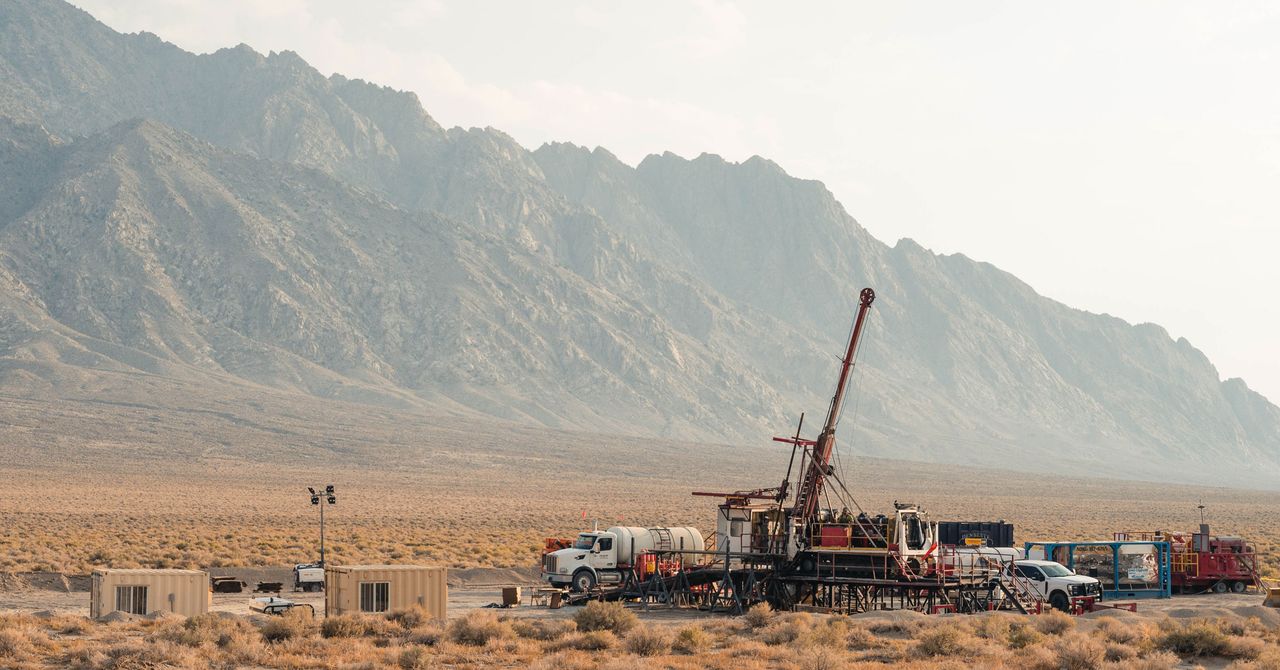
A geothermal startup said Thursday that it has hit gold in Nevada—metaphorically speaking. Zanskar, which uses AI to find hidden geothermal resources deep underground, says that it has identified a new commercially viable site for a potential power plant. The discovery, the company claims, is the first of its kind made by the industry in decades.
The find is the culmination of years of research on how to find these resources—and points to the growing promise of geothermal energy.
“When we started this company, I think the most common message we heard was that geothermal was dead—it was a history of bones, a graveyard of so many failures,” says Carl Hoiland, a cofounder of Zanskar. “To get to this point where, thanks to these new tools and these new capabilities, you can systematically find these sites and systematically derisk them—we just think this is the first full-scale signal that the tide has turned.”
In theory, geothermal power is one of the simplest methods of generating renewable energy. Reservoirs of hot water underground, heated by the Earth’s core, produce steam that can then be used to power turbines at the surface, requiring no excessive mining or complex conversions of fuel. Geothermal resources are especially accessible in areas where tectonic plates meet and the Earth’s crust is thinner, making the western US a great candidate for power plants. The world’s largest developed geothermal field, in California, is built on the site of hot springs that humans have used for thousands of years; the first power plant was built there in the early 1920s.
But a big part of the geothermal puzzle is actually finding these resources. It’s rare to find hot springs or vents at the surface that lead to a productive spot to put a power plant. Most geothermal systems that are hot enough to make electricity are deep underground, and there is no evidence at the surface. These are known as hidden or blind systems—and identifying where they are is surprisingly challenging. As a result, many geothermal power plants are built over systems that were found accidentally, while drilling for agricultural wells, minerals, or oil and gas exploration.
“It is sort of a needle-and-haystack problem,” says Joel Edwards, Zanskar’s other cofounder. “A very small percentage of the land that you will look at will have a geothermal system associated with it.”
In the 1970s, during the oil crisis, the federal government decided to try to increase the US’s output of geothermal energy. As part of that effort, they mapped out a grid in Nevada to try to methodically drill for blind systems.